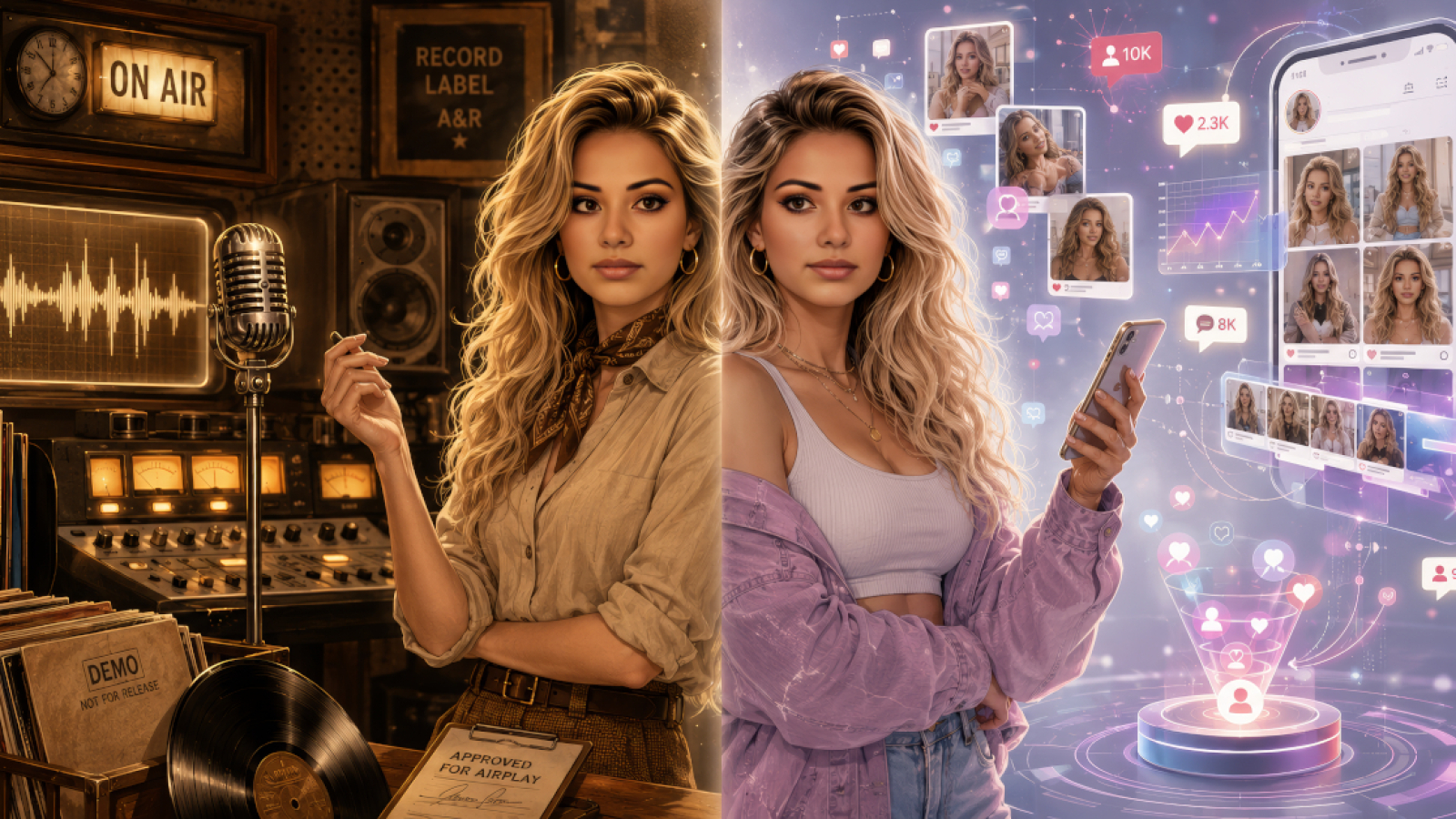
When Gatekeepers Controlled the Airwaves
There was a time when the music industry had very visible gatekeepers.
If an artist wanted the world to hear their song, they usually needed a record label. And even if they got signed, they still needed radio executives to decide the song was worth playing. A song could be beautiful. It could be heartfelt. It could be original, catchy, emotional, and full of life.
But if the label did not push it, and the radio stations did not play it, most people never heard it.
That did not mean the song was bad.
It simply meant the gatekeepers never opened the door.
I have been thinking about that a lot lately, because I believe something very similar is happening now on Instagram.
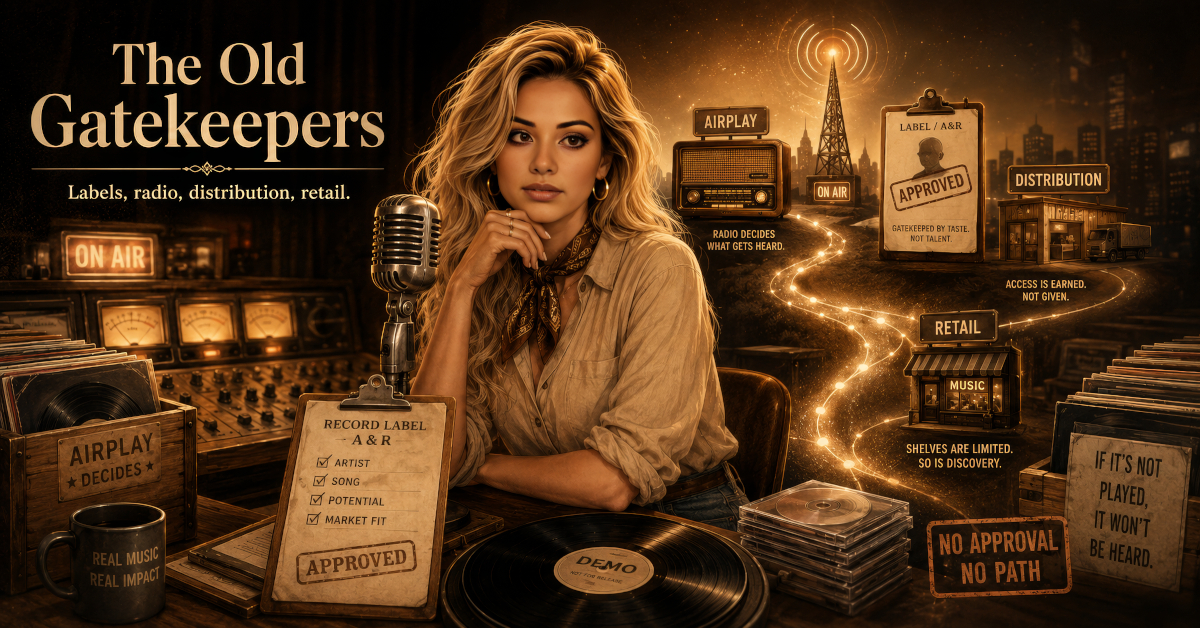
The Old Music Industry Was a System of Access
The old music industry was not simply a romantic world where the best songs naturally rose to the top. It was a system of access.
A musician needed more than talent. They needed recording time, label interest, an A&R person willing to champion them, radio programmers willing to play them, distributors willing to place their records or CDs into stores, and retailers willing to give those records physical shelf space. Every step created another gate.
Radio airplay was one of the most powerful gates. A song could be beautifully written and wonderfully performed, but if radio did not play it, most listeners never had the chance to discover it. The history of payola makes that especially clear. The FCC still describes payola as hidden payment or consideration given in exchange for broadcast exposure without proper disclosure, which shows just how valuable radio play was — and how easily the public’s sense of “what is popular” could be shaped behind the scenes.
The CD era had its own version of this same control. By the 1990s, CDs were the center of the recorded music business, but an artist still needed manufacturing, distribution, promotion, retail placement, and industry support. Even the price and availability of CDs were shaped by powerful companies. In 2000, the Federal Trade Commission announced settlements with major record companies over practices it said restrained competition in the CD market and encouraged higher consumer prices.
Even the music charts were not as neutral as they appeared. Before Billboard adopted SoundScan data in 1991, charts relied more heavily on reported sales from stores. When SoundScan began tracking actual sales data, the industry suddenly saw that genres such as country, hip-hop, hard rock, alternative rock, and metal had been stronger than many insiders realized. In other words, the old measuring system had helped shape the story of what counted as “popular.”
That is the part that feels so familiar now.
The public did not always hear the best music. They often heard the music that successfully passed through the gates.
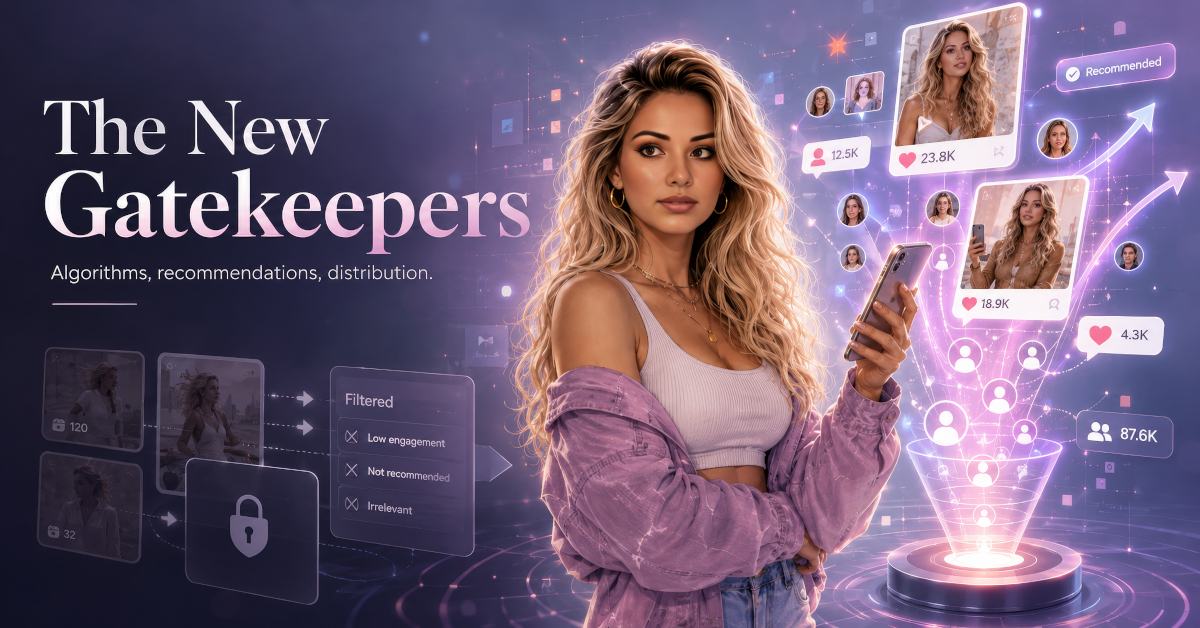
The New Gatekeeper Is the Algorithm
And today, on Instagram, creators face a modern version of that same problem.
This is not just a feeling creators have. Meta itself describes Instagram and Facebook recommendations as AI-driven systems that sort through enormous amounts of content and decide what is most relevant to show each person. Meta has also made clear that some content may be allowed to remain on the platform while still being ineligible for recommendation, meaning it may not be distributed as widely. That distinction matters. A creator’s post does not have to be removed in order to be limited. It can simply be left outside the recommendation system, shown mostly to existing followers, and denied the chance to travel. Researchers have described this as algorithmic visibility and invisibility: the way platform systems can enable some creators to be discovered while leaving others feeling unseen.
The radio programmer has become the algorithm. The record store shelf has become the feed. The radio spin has become the recommendation. The hit single has become the viral post. And once again, the painful truth for creators is that talent alone does not guarantee visibility.
Instagram decides what gets shown. It decides who gets reach. It decides which posts are pushed beyond a creator’s existing audience and which ones quietly disappear after a few hours. It decides what has the chance to go viral and what never gets a chance at all.
Low Reach Does Not Mean Low Talent
And for creators, that can be heartbreaking.
Because there are so many incredibly talented people making beautiful things every single day. Artists. Photographers. Writers. AI creators. Models. Storytellers. Fashion creators. Dreamers. People pouring their heart, time, imagination, and emotion into their work.
And so many of them barely get seen.
They sit at 1,500 followers, or 2,000 followers, or maybe even less. They post something wonderful and get a handful of likes. Maybe a few kind comments from the same loyal friends. Then the post fades away, not because it lacked value, but because Instagram did not choose to show it to more people.
That is the part I think we do not talk about enough.
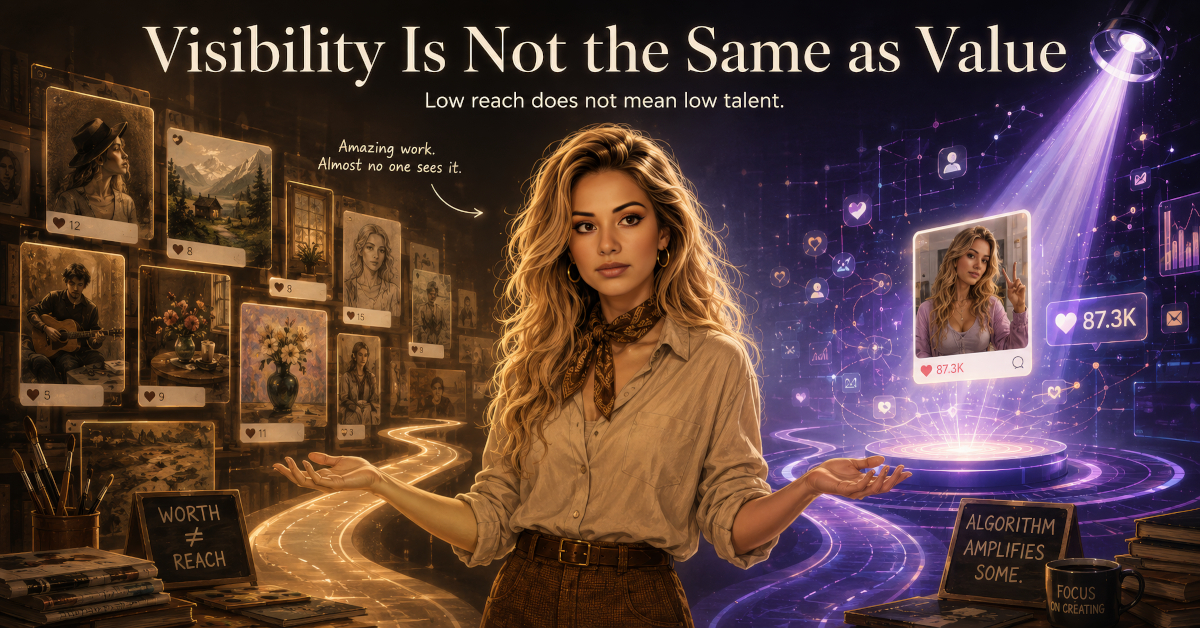
Low reach does not mean low talent.
Low likes do not mean low worth.
A post that gets 80 likes is not automatically less beautiful than a post that gets 8,000. A creator with 2,000 followers is not automatically less imaginative than someone with 200,000. Sometimes the difference is not quality. Sometimes the difference is distribution.
The Invisible Door
The platform either gave the work a chance, or it did not.
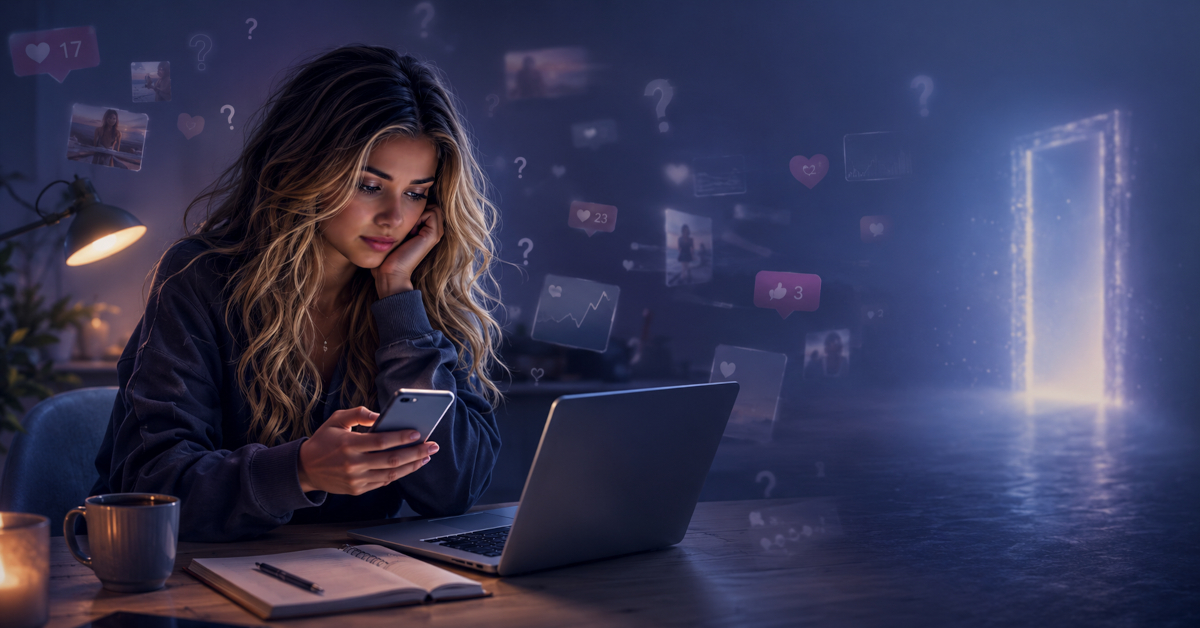
And the hardest part is that the door is invisible.
There is no radio executive to call. No office to walk into. No clear explanation. No honest answer that says, “This is why your post was not shown.” Instead, creators are left guessing.
Was the image not good enough?
Was the caption wrong?
Did I post at the wrong time?
Did I use the wrong word?
Was I too bold?
Too safe?
Too different?
Too similar?
Did the algorithm simply decide I was not worth showing today?
That uncertainty can wear on you.
It makes creators question themselves. It makes them compare their work to viral posts and wonder what they are missing. It makes them feel invisible, even when they are creating something real and meaningful.
The Illusion of Follower Count
This is also why follower count may not mean what creators think it means anymore.
For a long time, gaining followers felt like building an audience. If someone followed you, it meant they had chosen to see more of your work. The relationship felt direct: creator to follower, artist to listener, person to person.
But on Instagram, that relationship is no longer fully direct.
A creator may have 5,000 followers, 50,000 followers, or 500,000 followers, but that does not mean their posts will be shown to all of those people. The platform still decides how much of that audience actually sees the work. Every post has to pass through another layer of judgment. Does it get early engagement? Is it eligible for recommendation? Does the system think it will keep people watching, scrolling, commenting, or sharing? Does it fit what the platform currently wants to promote?
So follower count can become a kind of illusion.
It looks like ownership, but it is really conditional access.
A large follower count may create credibility. It may impress people when they visit your profile. It may help a creator look established. But it does not guarantee reach, engagement, income, or creative freedom. A creator can have a large audience and still feel invisible if the platform stops distributing their work.
And smaller creators can feel this even more painfully. They may believe they are failing because their follower count is not growing, when the truth may be that the platform is simply not giving their work enough chances to be discovered.
That is why follower count should not be confused with creative worth.
It is not the same as talent.
It is not the same as loyalty.
It is not the same as impact.
It is not even the same as reach.
It is a visible number attached to an invisible system.
And maybe that is one of the hardest parts of being a creator today. We are taught to measure ourselves by numbers we do not fully control.
Instagram Is a Distribution System
I do not think this means creators should abandon Instagram. For all its flaws, Instagram has still helped people find friends, communities, opportunities, and audiences they may never have found otherwise. I know that has been true for me.
But I do think creators need to be honest about what Instagram is.
It is not just a gallery.
It is not just a community.
It is not just a place where the audience decides what matters.
It is a distribution system. And distribution systems have power.
Build a Place the Algorithm Does Not Own
That is why creators need more than followers. They need connection. They need places where their audience can actually find them. They need websites, blogs, email lists, communities, and spaces where the relationship is not entirely filtered through a platform’s decision to show or hide a post.
Instagram may still be part of the journey. It may still be the radio station. It may still be where people first discover the song.
But it cannot be the only place where the song exists.
Because the algorithm may decide what gets shown.
But it does not get to decide what has value.
And it does not get to decide whether the song was worth singing.
Sources and further reading
- Federal Communications Commission — Payola and Sponsorship Identification
- Federal Trade Commission — Record Companies Settle FTC Charges Restraining Competition in CD Music Market
- The Ringer — How SoundScan Changed the Billboard Charts
- Meta AI — The AI Behind Unconnected Content Recommendations on Facebook and Instagram
- Meta — Recommendation Guidelines
- Meta — Sharing Our Content Distribution Guidelines
- Media, Culture & Society — Platform Governance at the Margins: Social Media Creators’ Experiences with Algorithmic (In)visibility
- MediaWell — Playing the Visibility Game: How Digital Influencers and Algorithms Negotiate Influence on Instagram
Yes. I still cry a little inside when I see someone posting wonderful things and getting no visibility. I want to help. But, the truth is, I can’t do much about it.