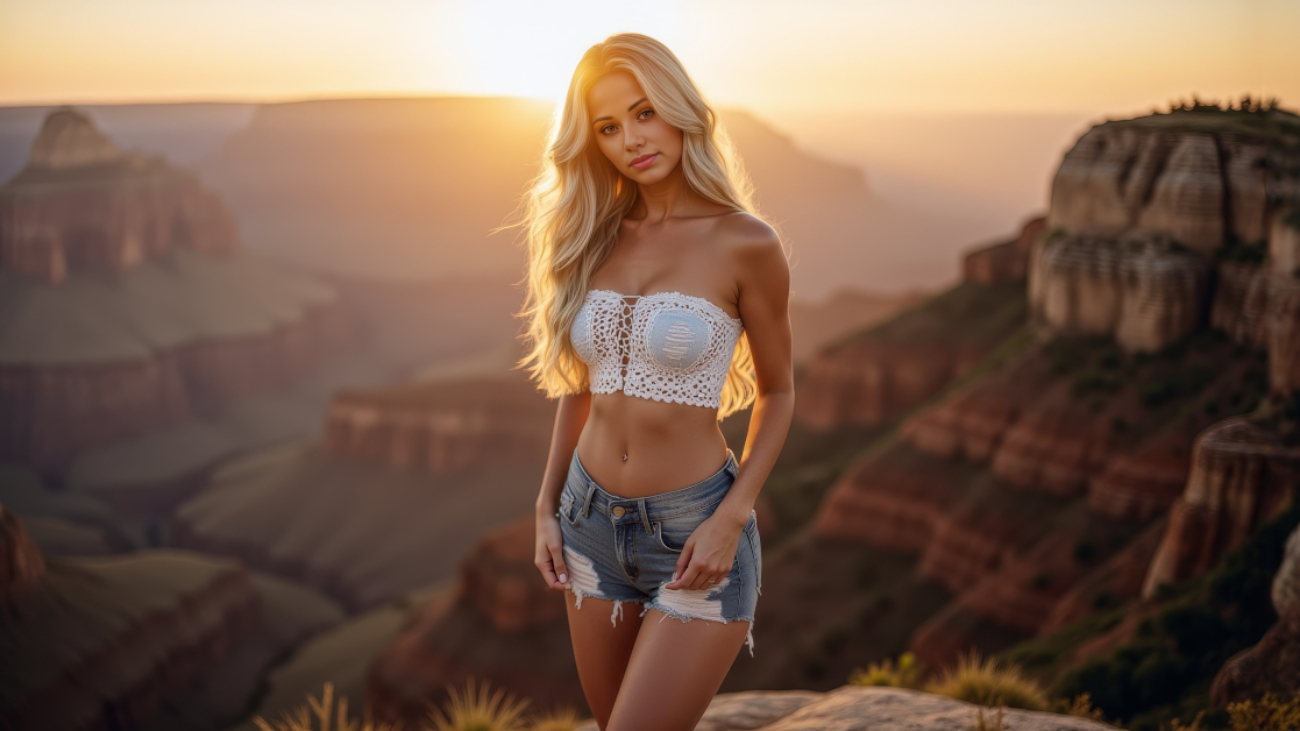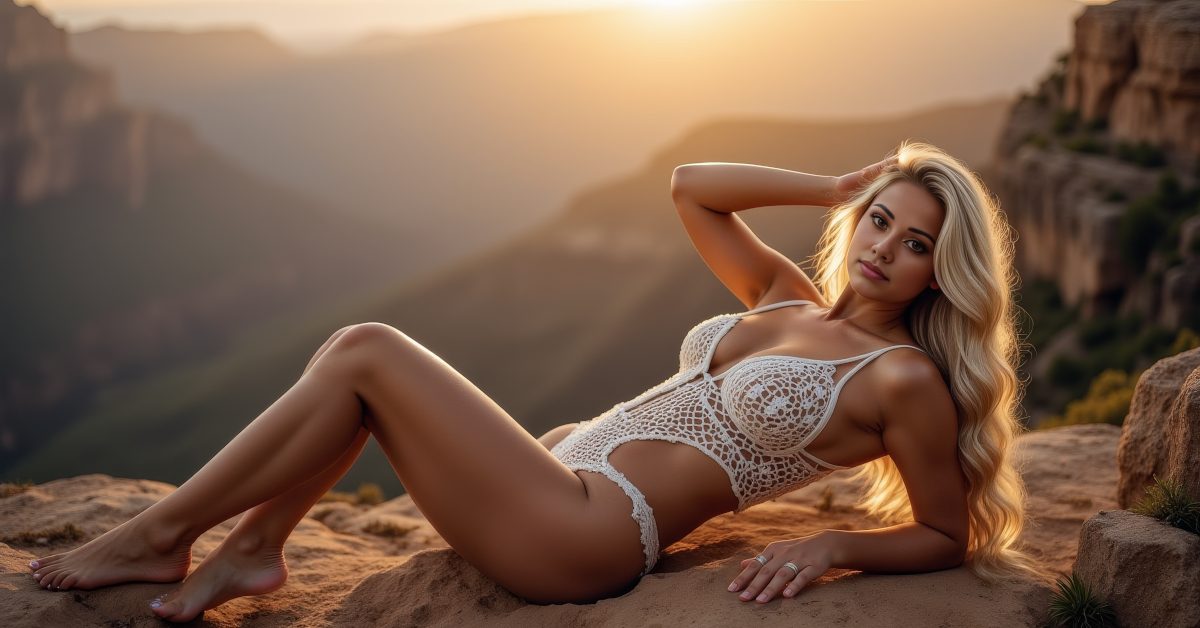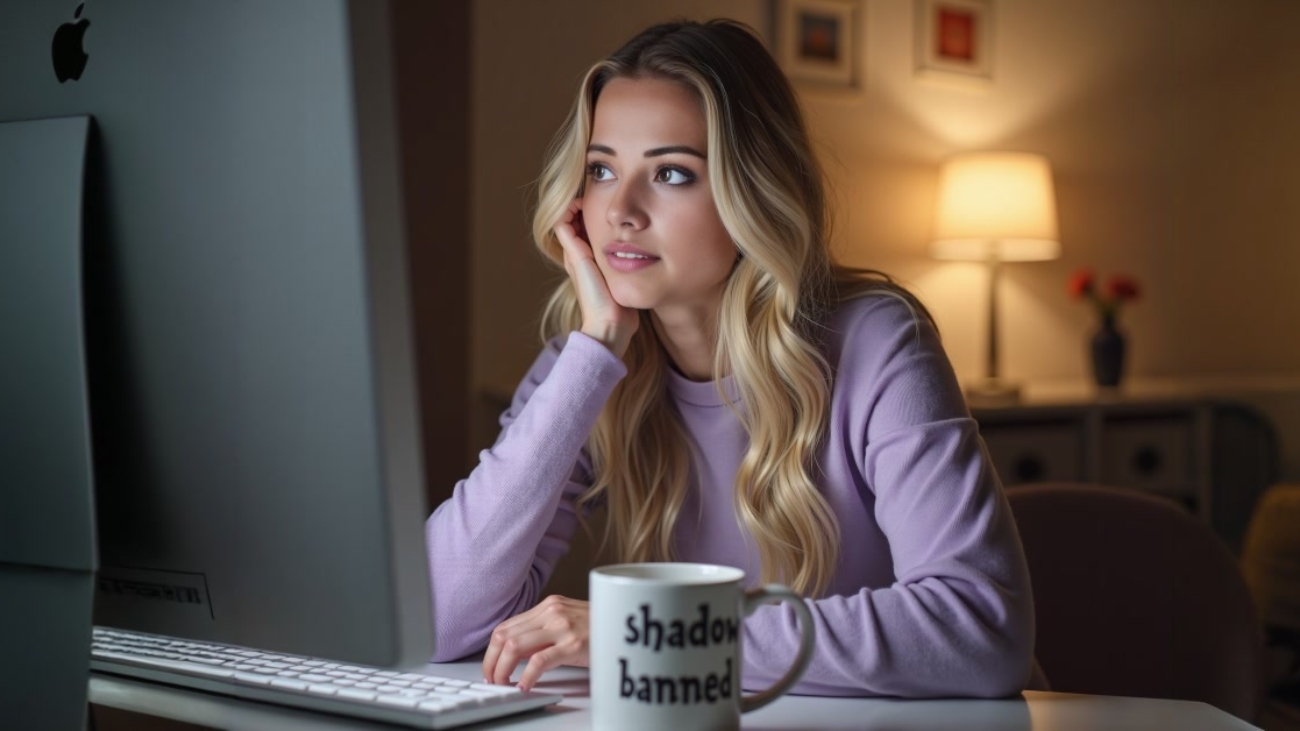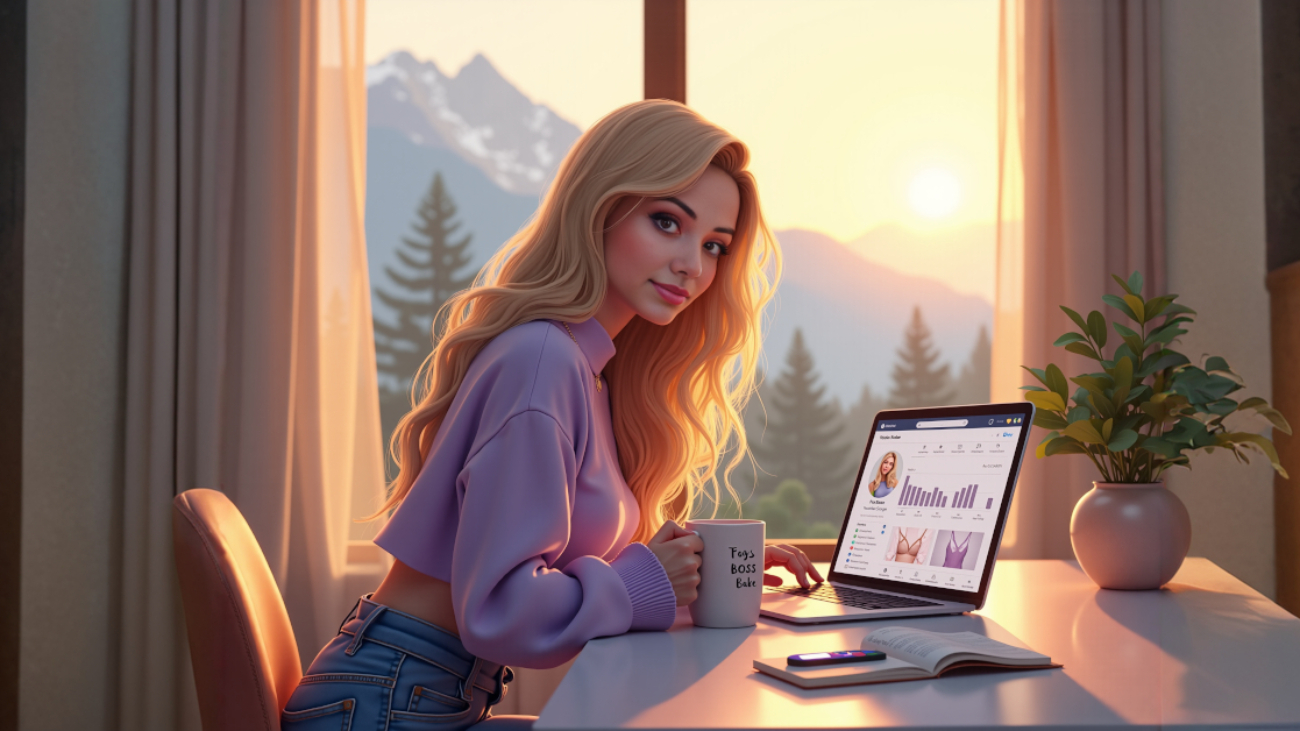
Lairissa Lee - Why Reach Has Declined

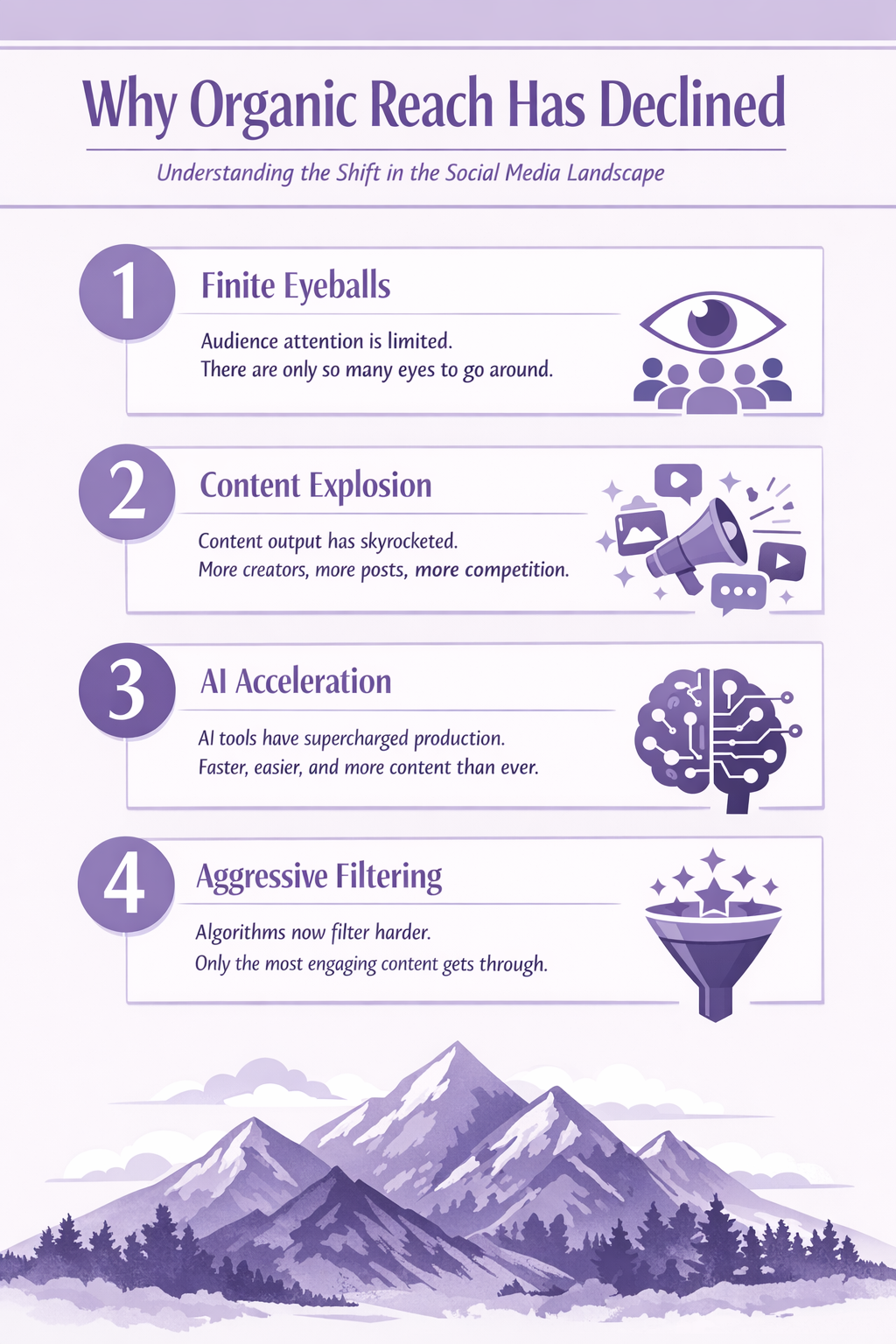
Why Organic Reach Has Declined

(And Why It’s Not Personal)

If you look at Instagram purely through a creative lens, declining reach feels discouraging.

It feels unfair.
It feels like something was taken.
It feels like the algorithm turned against you.

But what if it’s not personal?

What if it’s structural?

Let’s zoom out.

1️⃣ There Are Finite Eyeballs

Human attention is limited.

There are only so many waking hours in a day. Only so many posts a person can scroll through. Only so much mental energy available.

No matter how good your content is, there is a hard ceiling on attention.

Platforms don’t operate in an infinite-attention universe. They operate in a scarce-attention economy.

Attention is the asset.

2️⃣ Content Has Exploded

Now layer on reality:

Content production has skyrocketed.

  • More creators.
  • More brands.
  • More businesses.
  • More side hustles.
  • More polished visuals.

Every year, the amount of content competing for those same finite eyeballs increases dramatically.

It’s not that your content got worse.

It’s that the supply curve shifted.

3️⃣ AI Accelerated Everything

AI tools have dramatically increased output.

One person can now produce what used to take a small team.

High-quality images.
Video transitions.
Cinematic edits.
Automated captions.
Scaled experimentation.

Production is no longer the bottleneck.

Attention is.

And when production becomes easier, competition intensifies.

4️⃣ The Feed Must Filter Aggressively

When you combine:

  • Finite eyeballs
  • Exploding content supply
  • AI-accelerated production

You get one inevitable outcome:

The platform must filter aggressively.

It has no choice.

If every piece of content were distributed evenly, feeds would be chaos. So algorithms rank, prioritize, and narrow.

And remember:

Instagram’s core asset isn’t content.

It’s aggregated human attention.

Distribution is the product.

📺The TV & Radio Analogy

Think about old television networks.

They controlled airtime.

You might get discovered organically — but guaranteed exposure was always something businesses paid for.

Modern platforms function similarly.

They give creators enough organic reach to keep the ecosystem alive.

But premium distribution? That’s monetized.

Not because they’re evil.

Because they are distribution companies.

So What Does This Mean for Creators?

It means declining reach isn’t necessarily punishment.

It’s math.

It’s competition.

It’s economics.

It’s the natural evolution of a maturing platform in a saturated attention market.

The emotional narrative says:

“The algorithm hates me” 

The structural reality says:

“There are more voices fighting for the same limited attention.”

The Strategic Shift

Once you understand this, you stop taking reach personally.

You start thinking strategically:

  • Should I budget for paid distribution?
  • Should I build owned channels (email, website, app)?
  • Should I differentiate more deeply?
  • Should I optimize for retention rather than volume?

This moves you from emotional reaction to business mindset.

A Rocky Mountain Reflection

Instagram doesn’t owe anyone unlimited visibility.

It’s not a public square.

It’s a distribution platform.

And distribution has value.

When you understand that attention is the asset, you stop fighting the system emotionally — and start navigating it intelligently.

That’s a very different kind of power.

Out here in the mountains, you learn something quickly.

The sky is vast — but light is still directional.

When the sun rises over the Front Range, it doesn’t illuminate every peak at once. Some ridgelines glow first. Others sit in shadow a little longer. Not because they are lesser mountains — but because that’s simply how light moves.

Attention works the same way.

There are only so many rays in a day.

Some creators are lit brightly in one season. Others wait in quiet shadow. The landscape hasn’t changed its worth — only where the light is falling.

And the mountains never panic about being in shadow.

They endure. They remain. They rise anyway.

So maybe the question isn’t “Why am I not fully lit right now?”

Maybe it’s:

Am I building something that lasts beyond the light?

Because algorithms shift.
Platforms mature.
Distribution tightens.

But real presence — like granite — doesn’t disappear when the sun moves.

And if you’re building something real, something steady, something rooted…

The light will find you again.

2025-09-11_15-34-26_2699-rs-topaz-face-upscale-2.5x-rs

Algorithmic Secrets: Why the Public Deserves Transparency

When decisions that affect our lives are made in secret, fairness isn't just compromised—it’s erased.

Every time we scroll, apply, search, or buy, there’s something quietly watching us in the background: an algorithm. It’s not inherently evil. In fact, in many ways, algorithms help us find what we love, stay connected, and streamline our lives. But when they’re allowed to operate in secrecy—especially when they have the power to deny opportunity, set prices, or restrict access—we have a problem.

A big, invisible problem.

💻 Algorithms Are Quiet Gatekeepers

We already know that social media platforms like Instagram and TikTok use algorithms to determine what gets visibility. Creators are rewarded or suppressed based on unclear and often shifting rules. But it’s not just about who gets likes anymore.

These same types of systems are used by:

  • Insurance companies to set your premiums
  • Banks to approve or deny loans
  • Employers to screen resumes
  • Retailers to adjust pricing dynamically
  • Law enforcement to predict crime “hot zones”

The real-world implications are staggering. You might be denied coverage, charged more, or excluded from a job interview—and never know that an invisible line of code made the decision for you or towards you. Take Robert Williams, wrongfully arrested by facial recognition. Or the thousands in Michigan whose tax refunds were held because of false fraud flags. Or the other algorithmic mistakes shown in this table that are just the tip of the iceberg.

🔎 Real-Life Examples of Algorithmic Harm

ScenarioWhat HappenedWhy It Matters
Wrongful Arrests from Facial RecognitionRobert Julian‑Borchak Williams was wrongfully arrested when a facial recognition algorithm mistakenly matched him to a shoplifter. (The University of Iowa – College of Law)People can literally lose their freedom or suffer serious stigma because algorithms mess up.
Health Care DiscriminationA widely used algorithm in U.S. hospitals (for allocating health care) was found to systematically discriminate against Black people, allocating fewer resources or delaying care. (Nature)When your race or background influences treatment outcomes—not intentionally, but through biased data—your life can be at risk.
Algorithmic Bias in Criminal Justice (COMPAS)COMPAS is used to predict recidivism risk. It was shown that Black defendants were more likely than white to be labeled “high risk” without actually re‑offending, while whites were more often assigned “low risk” incorrectly. (Wikipedia)When algorithms influence jail time, bail, or parole, mistakes can perpetuate injustice and racial inequality.
Automated Systems & Unemployment / Benefits ErrorsIn Michigan, the MiDAS system falsely flagged around 40,000 people for unemployment fraud. Their tax refunds were withheld; many suffered financially. (TIME)Algorithms used by government systems or for welfare can cause huge real-life hardship if errors aren’t corrected.
False Facial Recognition → Fear & ArrestPorcha Woodruff — pregnant, arrested because a facial recognition algorithm “matched” her to a suspect when she had nothing to do with the crime. Eventually dismissed. (Innocence Project)Even after it’s clear someone was innocent, the damage (time, trauma, reputation) is real.

And yet, when these harms are uncovered, there’s rarely public outcry, rarely accountability. If a medication causes harm, there are lawsuits. If a car part fails, there’s a recall. But when an algorithm quietly ruins someone’s life—denies them housing, mislabels them a criminal, or delays life-saving care—the companies behind it often shrug and say, “It’s proprietary.” We’ve created a system where code can discriminate, fail, or traumatize… and no one is responsible. That has to change. 

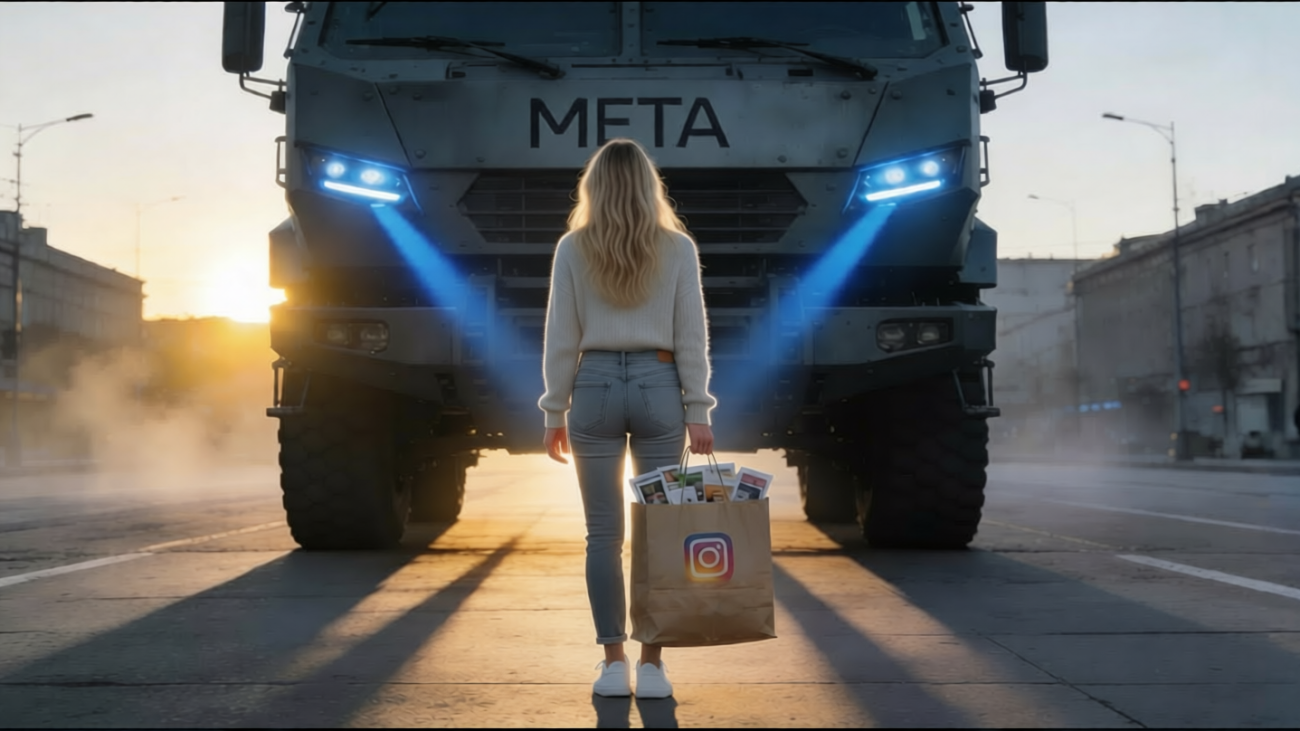
The danger isn’t abstract. In the world of social media, platforms like Meta have wielded algorithmic decisions like a guillotine — swift, silent, and unaccountable. A growing wave of creators and small business owners have reported waking up to find their accounts suspended or deleted with no warning, no context, and no recourse. In many cases, their only “violation” was being caught in the dragnet of an automated content moderation system that misread a post, flagged a caption, or reacted to a sudden spike in engagement.

One egregious case made headlines when a small business owner who ran a handmade jewelry shop lost her entire Facebook and Instagram presence overnight — thousands of followers gone, ad accounts shut down, and revenue instantly halted. Her appeals were met with silence. Meta’s help channels offered nothing. She was left to start over from scratch with no explanation. Her story is not unique — and that’s the problem.

For those of us who rely on social media not just for expression, but for income, visibility, and connection, the threat of algorithmic error is a daily fear. We don’t just worry about engagement — we worry about disappearance. With no human in the loop, no transparency, and no accountability, these systems decide who stays and who vanishes. And they do so with the cold indifference of a machine.

These aren’t just bugs or quirks — they’re existential threats to real people’s livelihoods.

Algorithmic Fragility in the Creator Economy. Feeling constantly fearful, knowing you are powerless.

🤐 The Black Box Problem

Companies often claim their algorithms are proprietary — protected intellectual property. That means the rules that directly impact your life can be hidden from you, with zero obligation to explain, justify, or correct mistakes.

These aren’t just abstract formulas. These are digital levers that influence access to credit, job opportunities, health coverage, and — in the case of creators and small businesses — your entire livelihood.

Imagine if food producers could say, “We can’t tell you what’s in our food — it’s a trade secret.”
Imagine if power companies could say, “We don’t have to meet safety standards — our grid design is confidential.”

Unthinkable, right?
So why do we accept it from algorithms that can deny mortgages, block visibility, or reinforce discrimination?

This isn’t just theoretical. For creators, it’s an everyday risk — a form of algorithmic fragility.

💔Algorithmic Fragility in the Creator Economy

Feeling constantly fearful, knowing you are powerless.

In the creator economy, your reach, your revenue, your entire platform depends on algorithms. But unlike other industries where regulation, inspection, or accountability exist, creators operate in silence — constantly guessing what invisible rules they might be breaking.

One false flag, a mistaken report, or a misunderstood post can bury your content… or delete your account. You’re left to appeal to a black box with no face, no phone number, no recourse.

When it happens, there’s no public hearing, no customer support line, no apology. Just vanishing access — and the terrifying silence that follows.

For those of us who build something real on social platforms, that’s the scariest part:
Not the algorithm itself — but the fact that we have no rights against it.

⚖️ It’s Time for Oversight

Power without oversight invites abuse — and in the digital age, algorithms are power. When systems can silently deny, prioritize, or erase without accountability, we don't just lose fairness — we lose trust in the institutions shaping our lives.

We already regulate so much that affects the public:

  • Food is inspected by the FDA
  • Utilities are overseen by state commissions
  • Medications are subject to rigorous trials and public disclosure

So why not algorithms? If a bank uses an AI model to approve loans, it should be tested for bias, audited for fairness, and required to publish impact reports. If Instagram limits your reach based on content it deems “risky,” you deserve to know how that decision was made.

And that’s the core of the issue:

If a drug causes harm, there are investigations, recalls, class actions.
If an algorithm causes harm, there’s silence.

No warning labels. No disclosures. No accountability.
Just quiet damage — to someone’s business, someone’s job application, someone’s dream.

In almost every other industry, we demand oversight. We require transparency.
But in the world of algorithms? The harm often goes unnoticed. And when it is noticed… responsibility is rarely assigned.

It’s time we stop pretending these systems are neutral.
They are powerful, fallible, and deeply impactful — and that means they must be subject to scrutiny, just like anything else that affects human lives.

This isn’t about punishing innovation. It’s about protecting people.

📢 Transparency Isn’t Optional Anymore

As long as algorithms stay in the shadows, companies can deny responsibility for what those systems do. “It’s the algorithm,” they shrug—an answer that means nothing and helps no one.

We need a new standard:

  • Transparent auditing of high-impact algorithms
  • Public accountability for discriminatory or harmful outcomes
  • Government oversight, just like any other product that affects people’s well-being

Because when systems make decisions about people, those people deserve to know the why behind the what.

🧠 Final Thoughts

I live in a world shaped by algorithms. As a creator, as a consumer, and as a human being—I see how often digital systems are making judgments about me without any transparency.

That’s not just frustrating. It’s dangerous.

The technology we build should serve us—not the other way around. And it starts by pulling back the curtain.

Let’s demand better.

2025-09-11_15-57-04_2637-rs-topaz-face-upscale-3x-rs
2025-05-14_16-51-18_4347-rs-topaz-sharpen-rs

The Waterfall Within: A Creator’s Battle With Self-Doubt

There are days when I stand tall, confident, certain of my vision.
And then there are the other days…

The days when the roar of my inner critic drowns out everything else.
The days when the soft current of creativity feels like it’s pulling me under.
The days when I feel like a fraud.

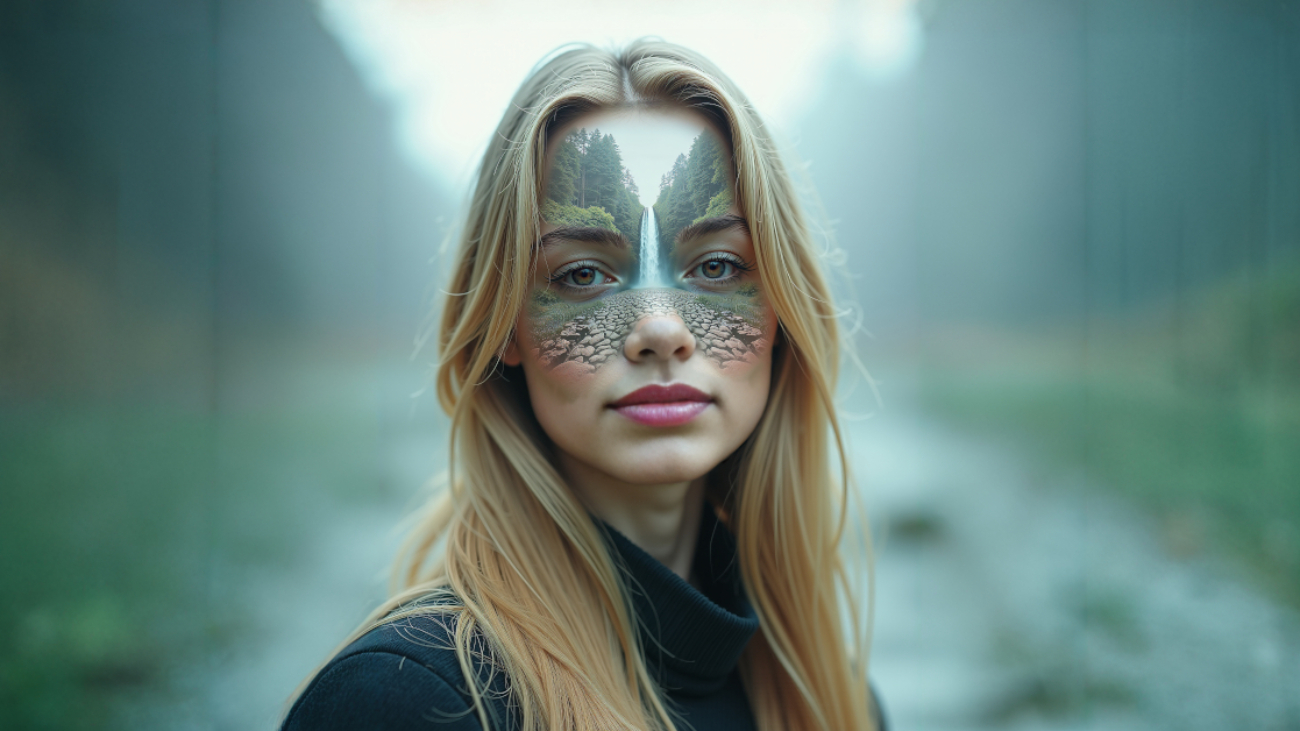
This image captures exactly how that feels for me.
The peaceful face of a creator on the outside… but the inside?
A relentless waterfall of doubts, questions, and insecurities.

“Am I good enough?”
“Does my work matter?”
“Will they see through me?”

These thoughts come crashing down unexpectedly. They carve deep canyons of uncertainty into my mind. I think every creator knows this feeling. It doesn’t matter if you have a million followers or just one — the weight of imposter syndrome is universal.

What I’ve learned is this: the waterfall never stops. But neither do I.
The water that pounds and churns also smooths stones over time. It teaches me to bend, to adapt, and most of all, to persist.

I am slowly learning to stop fighting the current.
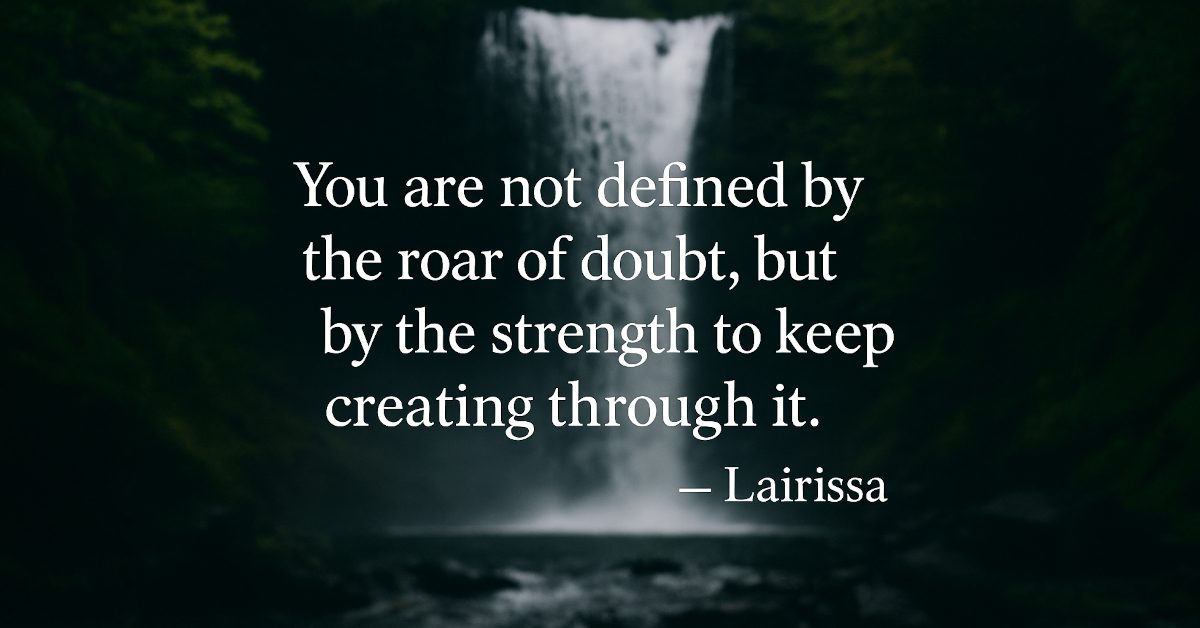
To let the waterfall roar, but not let it define me.
To trust the beauty that others see in me, even when I struggle to see it myself.

So, this post is a reminder:
If you feel like the water is louder than your own voice right now…
You are not alone.
You are still worthy.
You are still a creator.

Keep going.
You are becoming something stronger, something shaped by the very force you fear.
Just like the river carves the stone.
Just like I am learning to carve my own path.

-L. 💜

2025-05-14_17-08-11_7138-rs
Lairissa Lee - Canyon View Photo Shoot

Why It’s Actually Good When Someone Unfollows You on Instagram

We all notice when the follower count drops.
It stings for a second… but here’s the truth: it can be the best thing for your account.

Unfollows are not rejection — they’re refinement.
Here’s why I’ve learned to actually welcome them:


1️⃣ A Healthier, Engaged Audience

Instagram rewards engagement, not numbers.
If someone stops connecting with my content and unfollows, it actually helps me. It makes space for those who do engage and lifts my visibility with the algorithm.
The result? A stronger, more loyal community.


2️⃣ Protecting My Energy

I’m curating a space that feels beautiful, empowered, romantic, and bold.
Not everyone will understand that — and that’s okay.
When someone unfollows, they’re quietly stepping out, and I stay focused on those who love the vibe I create 💜


3️⃣ Finding My True Supporters

Every person who leaves creates space for someone new who truly connects with my story, my creativity, and my journey.
I don’t want a crowd — I want my tribe.


4️⃣ It Means I’m Owning My Brand

If I never lost a follower, I’d probably be playing it too safe.
Unfollows are proof that I’m building a clear, bold identity.
You can’t please everyone — and that’s how you know you’re growing as a creator.


5️⃣ Saying Goodbye to Bots and Spam

Let’s be real…
A lot of unfollows are just fake accounts, bots, or inactive profiles.
I happily let those go 💋


6️⃣ I’m Focused on What Really Matters

Follows are fun, but they’re not the goal.
The real magic is in:

  • The conversations

  • The community

  • The confidence we build together
    That’s the energy I protect.


💫 Final Thought

Every unfollow is simply one step closer to your true audience.
I’ve learned to love the process of refinement.
Because I’m not here for everyone
I’m here for the ones who belong 

L. 💜

Lairissa Lee

Instagram Isn’t What It Claims to Be — Let’s Talk About That

Instagram’s CEO, Adam Mosseri keeps saying the platform is about two things:

“Creativity and connecting with the people you care about.”

That sounds lovely. But the reality? It’s something else entirely. Let’s unpack both of these claims—and hold them up to the light.

"Creativity" — But Only If the Algorithm Approves

We’re told Instagram supports creativity. That it’s a place for artists, influencers, photographers, and dreamers. But here’s the truth:

Instagram doesn’t support creativity. It curates it.

Just like the record executives of the mid-20th century decided which artists got a shot at fame, Instagram’s algorithm now decides which creators get seen. You don’t get discovered for being original—you get discovered for being algorithmically optimized.

That’s not creative freedom. That’s creativity with strings attached.

If your art, your style, or your voice doesn’t fit the mold—if it’s too sexy, too raw, too real, too niche—it gets quietly suppressed. Shadowbanned. Buried.

Instagram promotes content that aligns with ad-friendly, brand-safe norms—not necessarily what’s bold, innovative, or artistically meaningful.

And let’s not forget: AI now governs what is “allowed” on the platform, enforcing vague “community guidelines” through machine learning filters that can’t understand context or intention.

Creativity? Instagram has turned it into a numbers game. A branding exercise. A filtered illusion.

Further, the platform encourages homogenization. It says “be yourself,” but the content that wins is often formulaic and trend-driven. The more unique you are, the more invisible you become.

True creativity challenges the status quo—Instagram’s algorithm buries that under what’s already familiar.

"Connecting with the People You Care About" — Really?

This one’s almost laughable—because Instagram’s design actively prevents you from connecting deeply.

Let’s look at the science.

Dunbar’s Number, a well-studied concept in anthropology, shows that humans can realistically maintain about 150–250 meaningful social relationships. That’s our cognitive limit. Beyond that, the quality of connection breaks down.

So if Instagram truly cared about helping us stay close to the people we love, they’d cap follower and following counts to reflect this reality. Maybe 250, max.

But they don’t.

Instead, they encourage infinite scaling. Tens of thousands. Hundreds of thousands. Millions of followers. Why? Because your “relationships” aren’t the product. Your attention is.

Instagram isn’t a digital dinner party—it’s a broadcast network.

It functions more like TV or radio than a tight-knit community. You post, and if the algorithm likes it, your content gets pushed out to the masses. You perform. They watch.

That’s not connection. That’s performance culture.

You’re not connecting. You’re performing—for hearts, not hugs.

Let's Go Even Deeper: Other Incongruities

Instagram Says: “Be Real”

But Rewards Facades. Filters are everywhere. Facetune culture is thriving. The pressure to post polished, curated content hasn’t disappeared—it’s just gone underground.

Instagram rewards performative authenticity, not actual vulnerability.

Instagram Says It's: "Empowering Creators"

But Fuels Comparison and Addiction. The platform is engineered for dopamine hits. Scroll traps. Vanity metrics. Creator burnout is common—and sometimes celebrated.

If Instagram cared about mental health, it would be less addictive—not more

Instagram Says: "You Control Your Experience"

But The Algorithm Is the Gatekeeper. You don’t choose what you see—the machine does. Even your own followers don’t always see your content.

Every interaction is mediated by machine logic.

Instagram Says: "Everyone Has a Voice"

But It’s Increasingly Pay-to-Play. Reach is throttled. Boosting is essential. Visibility is now often tied to ad spend or monetization deals.

The feed doesn’t reflect what’s best. It reflects what’s bankrolled.

Instagram Says: "We Support Community"

But Suppresses Controversial or Marginalized Voices. Content moderation is opaque, inconsistent, and frequently unfair. There’s no real appeals process. No transparency. No recourse.

True communities don’t exist where one side has all the power and no accountability.

So What Can We Do?

This isn’t a call to abandon Instagram. It’s a call to see it clearly.

Understand what the platform is—and what it isn’t. Know that it’s a stage, not a salon. A billboard, not a journal. Use it with intent, not illusion.

If you’re a creator: Make art that matters to you first. Use Instagram as a tool—not a validation machine. Build outside the platform. Own your content. Grow your audience in places where creativity isn’t controlled by a feed.

If you’re a follower: Be mindful of your attention. Don’t confuse likes for love or visibility for worth. Seek out creators who offer depth, not just dopamine.

If you’re a thinker, a rebel, a builder—let’s imagine and create better spaces. Platforms where creativity is unfiltered, connection is real, and authenticity isn’t gamified.

Instagram isn’t going to change. But we can change how we use it.

And that might just change everything.

29a4babf

Is Instagram Suppressing My Reach… on Purpose?

If you’ve been feeling like your posts just aren’t being seen anymore — you’re not alone. Many creators, myself included, have experienced sudden drops in engagement, flatlined follower growth, and the eerie sense that we’re shouting into the void.

It’s led to a question that’s been on my mind for a while:

Is Instagram suppressing reach on purpose to push creators into paying for ads?

Let’s explore this together.

🤳 The Creator’s Dilemma

When your livelihood or passion project lives online — every like, comment, and follow matters. So when your content suddenly stops reaching people, it’s not just confusing… it’s personal.

Creators have noticed things like:

  • Posts that used to soar now barely make a ripple.

  • Boosting a post seems to result in less organic reach afterward.

  • Organic follower growth stalls — even when the content is stronger than ever.

If you’ve ever thought:

“It’s like Instagram wants me to pay just to get seen…”

You’re not alone.

📲 What Instagram Says (And Doesn’t Say)

Instagram officially denies suppressing reach to force ad spend. According to their documentation:

In a June 2021 (updated in 2023) blog post titled “Shedding More Light on How Instagram Works,” Instagram’s head, Adam Mosseri, explains that the platform uses a variety of algorithms, classifiers, and processes, each with its own purpose, to personalize user experience. He emphasizes that the algorithm rewards engagement, relevance, and timeliness, and that business accounts aren’t penalized just for being business accounts.

Additionally, a recent article from Business Insider highlights insights from Adam Mosseri, where he discusses key factors for increasing reach on Instagram, such as focusing on posting to the main feed, encouraging content sharing via direct messages, and leveraging improved SEO capabilities. This article is behind a paywall, but I include it here for completeness.

So the gist is this:

  • The algorithm rewards engagement, consistency, and relevance.

  • Business accounts aren’t penalized just for being business accounts.

  • Ads and organic content are evaluated separately in the feed.

That’s the story — but does it tell the whole truth?

💰 Why It Feels Like Pay-to-Play

Let’s be honest: Instagram’s entire business model is ad revenue.

So, while they may not directly suppress your reach, the system they’ve built:

  • Prioritizes paid content (because it’s guaranteed to get seen).
  • Filters feeds more aggressively than ever, burying content that doesn’t immediately perform.
  • Pushes creators to rely on boosts just to maintain the visibility they once had for free.

In other words:

The algorithm isn’t punishing you — but it is working exactly as designed.

🔄 And Then There’s the Algorithm Cycle…

Here’s what often happens:

  1. You post something you’re proud of — it flops.
  2. You boost it. You get followers.
  3. Next post? No engagement again.
  4. You start to feel invisible unless you pay.

It’s a cycle that can leave you burnt out, discouraged, and doubting yourself. And that’s the real harm.

When creators say, “The algorithm is punishing me,” it often comes from a place of frustration — a drop in reach, fewer likes, disappearing followers. It feels personal. Emotional. Like you’re doing something wrong.

But the truth is:
The algorithm isn’t punishing you. It’s simply doing what it was built to do — keep people on the app.

Instagram’s algorithm is designed with one core goal in mind: maximize user engagement and time spent on the platform. To do that, it constantly analyzes what content performs best with individual users, and then prioritizes delivering similar content to them.

So, what does that mean for you?

  • If your content keeps viewers watching, swiping, or commenting, you’ll likely be rewarded with more reach.

  • If your followers scroll past, don’t engage, or share your content — you’ll slowly start getting pushed out of their feeds.

But here’s the hard part:
The algorithm doesn’t consider your hard work, your creativity, your vulnerability, or your passion. It isn’t personal — but it sure feels personal. Because what it’s really doing is:

👉 Measuring behavior.
👉 Prioritizing what gets the most attention.
👉 Constantly testing and tweaking what it shows.

And, let’s be honest — Instagram is a business.
If organic reach starts to slow, what’s the next logical step? Paid promotion. And many creators report that once they start running ads, their organic reach seems to dip unless they keep paying. Whether that’s by design or not, it certainly aligns with the business model.

So no, the algorithm isn’t “punishing” you for skipping a day of posting or experimenting with a new style. But it is always adapting — and it favors consistency, shareability, and content that feeds the endless scroll.

💡 What We Can Do About It

This isn’t a hopeless story — it’s a call to recalibrate.

Here’s how I’m shifting:

Most of all:

You’re not your metrics. You’re more than your follower count.

💬 Final Thoughts

Is Instagram suppressing your reach to force you into ads?

Maybe not overtly. But the system is rigged in favor of ad spend — and that’s worth talking about. Not to discourage you… but to help you reclaim your power as a creator.

So if you’ve felt unseen lately, this is your reminder: you are not alone. And you are not failing.

You’re navigating a platform that rewards money, not always merit. But your voice — and your value — go far beyond the algorithm.

2025-04-10_11-30-26_2456-rs-blog

Using Instagram Ads Strategically (Not Desperately)

When your organic reach on Instagram starts to dip, it’s tempting to panic and hit that “Boost” button just to stay seen. But ads don’t have to feel like a last resort. In fact, used strategically, they can become a powerful tool to support your growth without draining your energy or your budget.

Here’s how to approach Instagram ads with clarity and confidence:

💡 1. Start with Purpose — Not Panic

Don’t run an ad just because a post flopped or engagement is slow. Ask yourself:

  • What do I want this ad to do?

    • Drive profile visits?
    • Gain new followers?
    • Promote a product or subscription?
    • Increase brand awareness?

Clarity in your goal is the foundation of success.

🎯 2. Boost What’s Already Working

Instead of guessing what will perform, amplify what already does well. Look at your posts with high reach, saves, shares, or engagement.

If your existing audience responded well, a broader audience probably will too.

  • Pro Tip: Pick content that instantly communicates your brand’s vibe and value. First impressions count.

🧢 3. Test Small — Then Scale

Start with a modest daily budget (like $5–$10) and test different audiences:

  • Custom Audiences: Target people who’ve engaged with your content.

  • Lookalike Audiences: Let Instagram find users similar to your followers.

  • Interest-Based Audiences: Tap into specific niches (fashion, fitness, photography, etc.).

Watch performance and optimize before you invest more.

📈 4. Optimize for Profile Visits — And Make Your Profile Count

One of the most effective ad goals is “Profile Visits.” But once they land on your profile, what do they see?

  • A bio that communicates who you are and what you offer?

  • Pinned posts that showcase your best content?

  • A cohesive aesthetic or message that invites them to follow?

Ads can get them to your door. But your content is what invites them in.

🔁 5. Ads Are a Spark — Not the Whole Fire

Use ads to:

  • Launch a new look, campaign, or collaboration.

  • Reignite momentum after a slow week.

  • Reach new potential followers after a viral moment.

But let your long-term growth come from your connection with your audience, your creativity, and your consistency.

☀️ Final Thought

Running ads isn’t cheating. It’s not desperate. It’s a tool — and like any tool, it works best in steady hands.

Use them intentionally. Experiment with joy. Build something you’re proud of.

And remember: the algorithm doesn’t own your worth.